Straight answers on custody, privacy, rate limits, and data accuracy.
Everything about what we store, what crosses the network, and how subscription billing behaves in practice.
Ready to inspect your own symbols?
Start with a free account, or open the desk directly in your browser.
Is GreeksView a broker? Do you hold my money?
No. GreeksView holds no funds and no positions. GreeksView is an analytics and order-entry interface. Your funds and positions live at your broker (Alpaca) under your own account and agreements. Orders reach that account only through the access you grant with Connect with Alpaca, on Alpaca's own page.
Do I have to paste anything from my broker?
No. GreeksView never asks for your broker password or keys. You connect your Alpaca account through Alpaca's own sign-in. When you connect Alpaca, Alpaca issues this browser an access token. It is kept encrypted in this browser and sent only with your requests to Alpaca: account, position, order, market-hours, symbol-list and option-contract requests through our relay; market data and order-status updates straight from this browser to Alpaca; our servers never store it. Our broker relay forwards it on each such request and does not store or log it. Our sync API refuses broker credentials outright.
Can I practice without risking money?
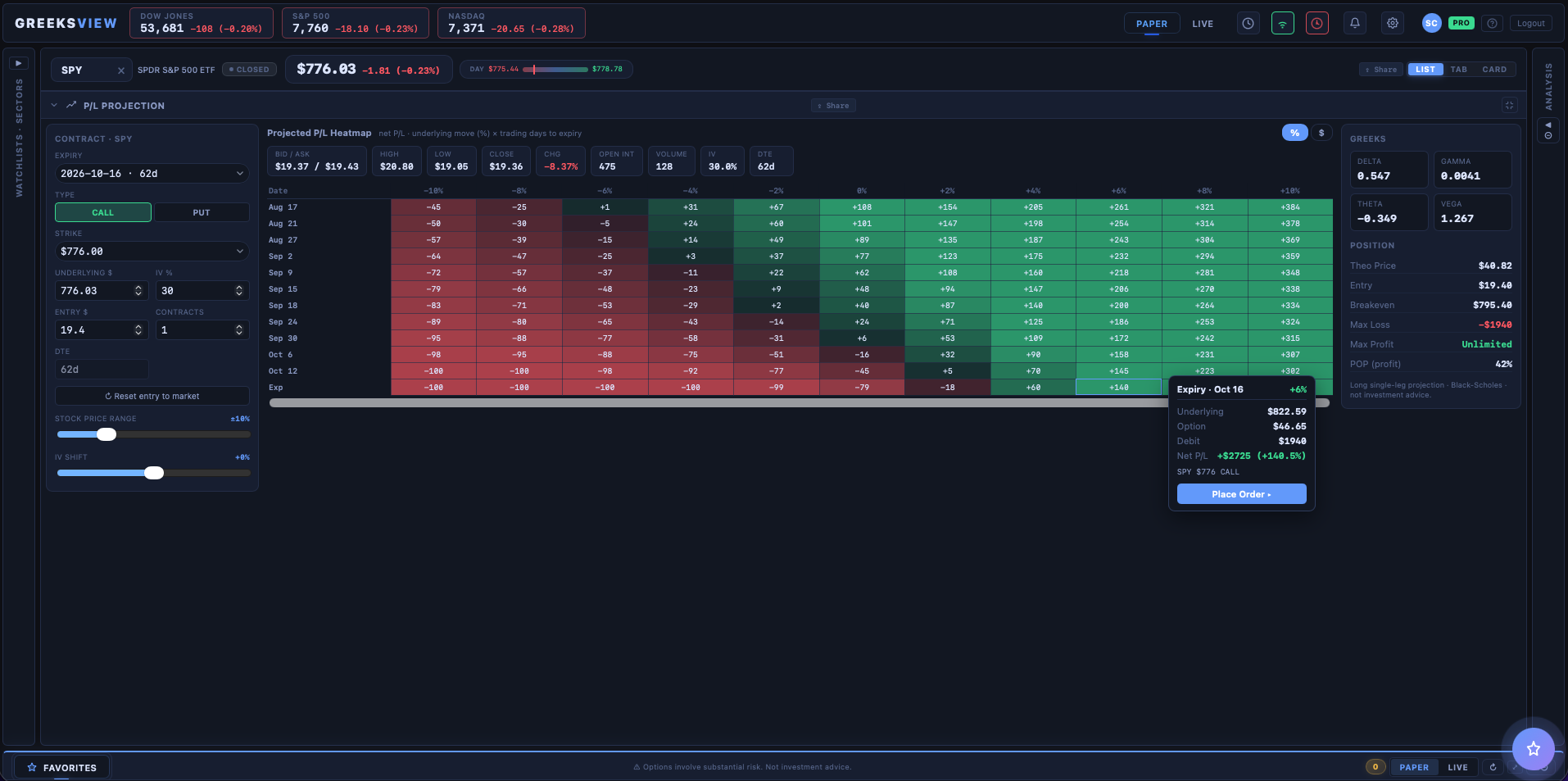
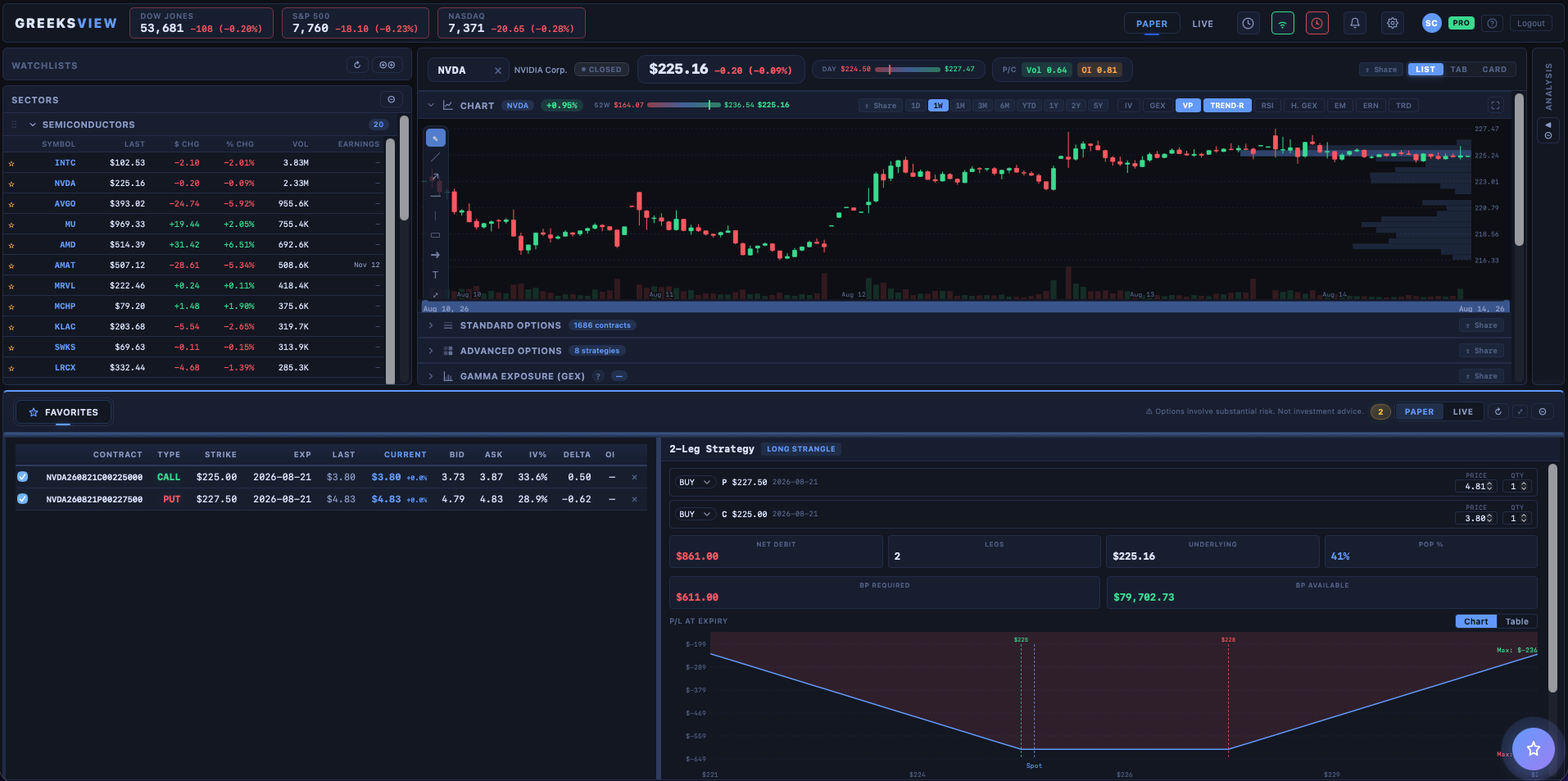
Yes. The analytics, the calculators and the P/L lab never place an order. The desk also works identically in paper mode: full chain, order ticket, portfolio and alerts.
A section showed data for a few seconds and then asked me to upgrade. Is that a bug?
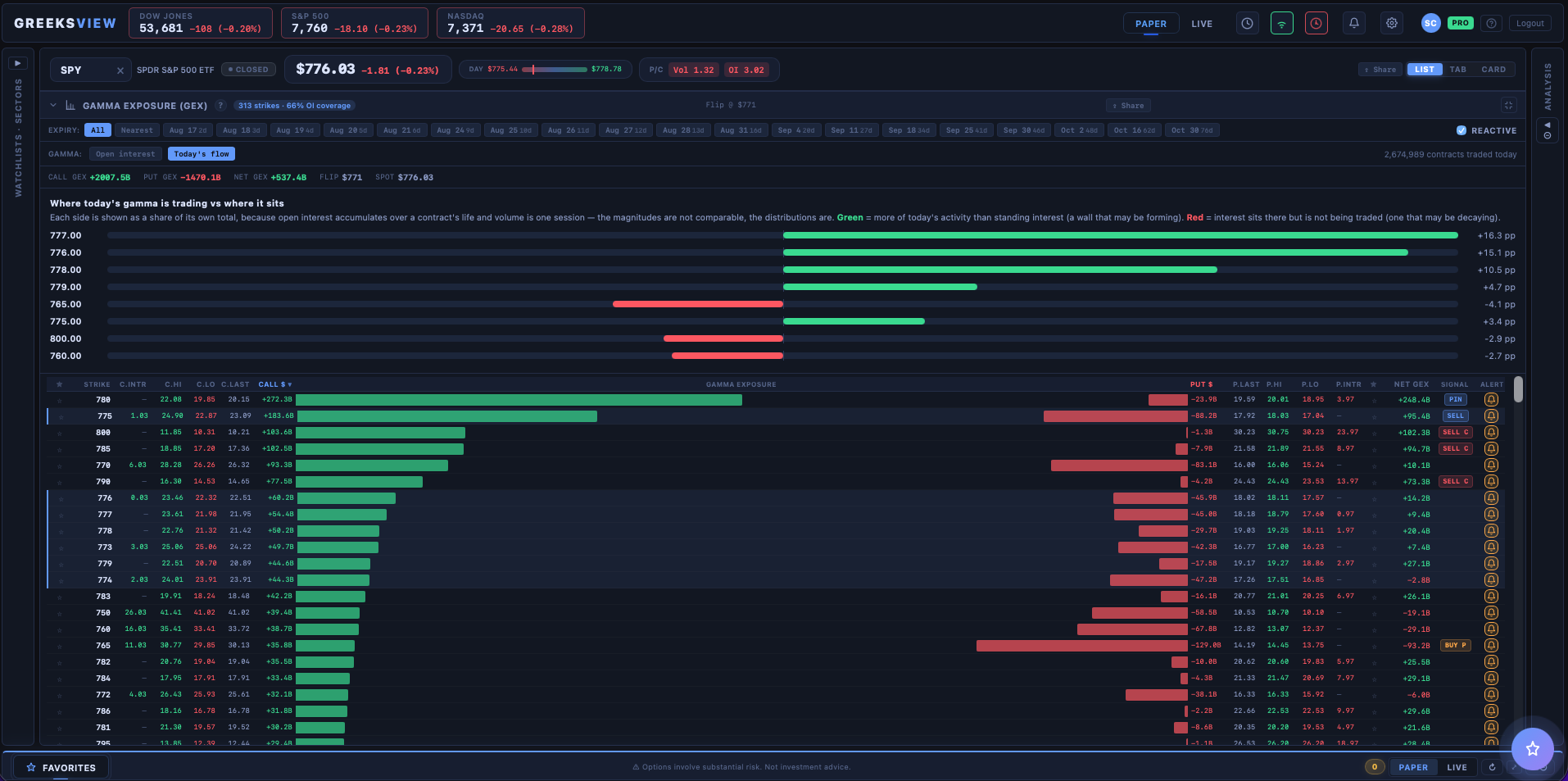
No — that is the preview. Gamma Exposure is a Pro feature, and a free account sees it running on your own symbols for a few seconds before it asks you to upgrade. Delta Exposure works the same way. So does the 0–1 DTE scanner. You are seeing the real thing, not a screenshot, which is the point. Everything else in the desk stays available.
It says "Pausing requests for 40s after hitting a rate limit". Did I break something?
No, and there is nothing to fix. Requests are metered per minute. When the desk reaches that ceiling it backs off and resumes on its own — the countdown is telling you it already handled it. It happens most often with many sections open at once. Closing sections you are not reading will keep you under the cap.
I picked several 0–1 DTE contracts across different tickers. Is that one order or several?
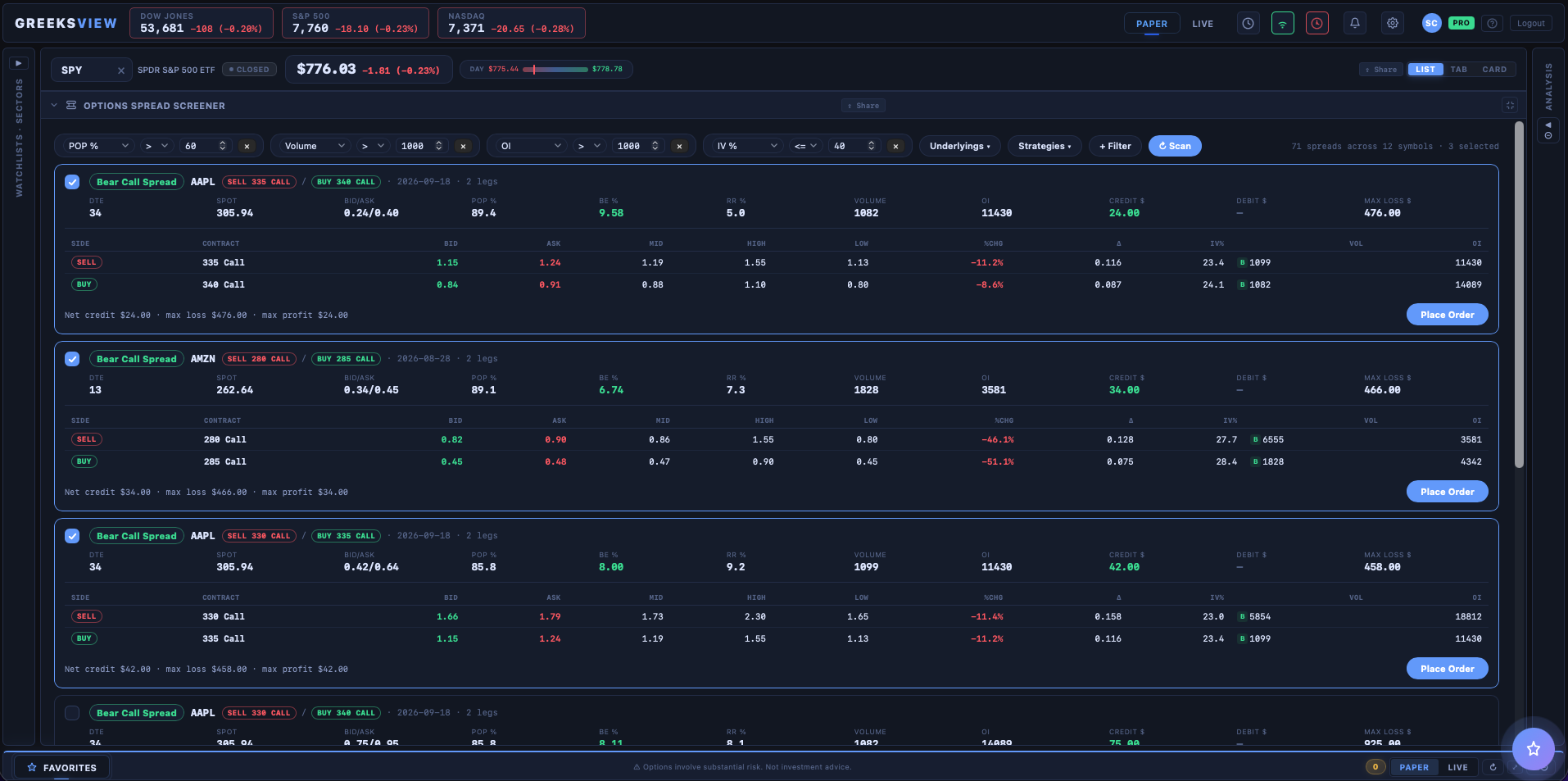
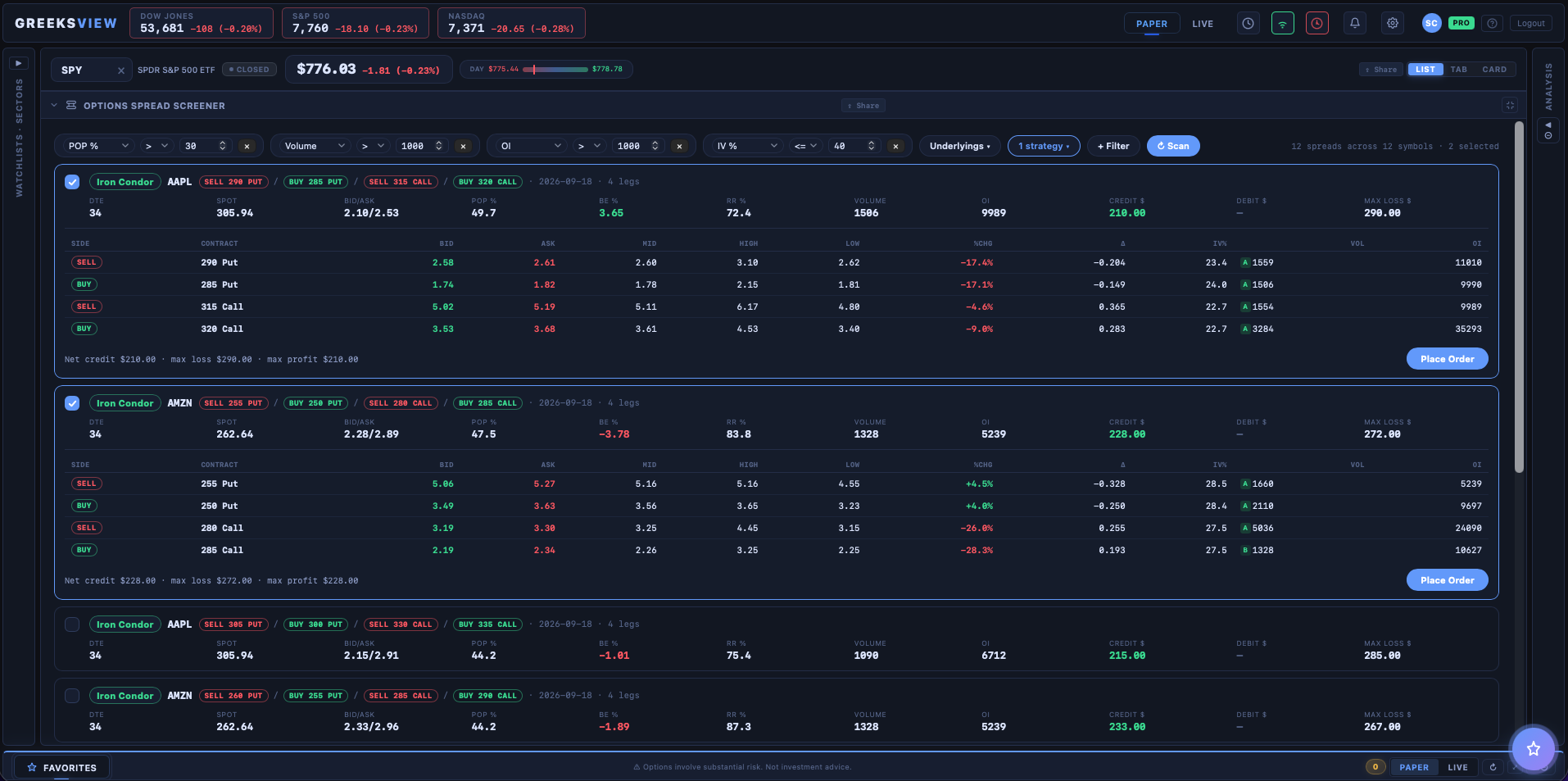
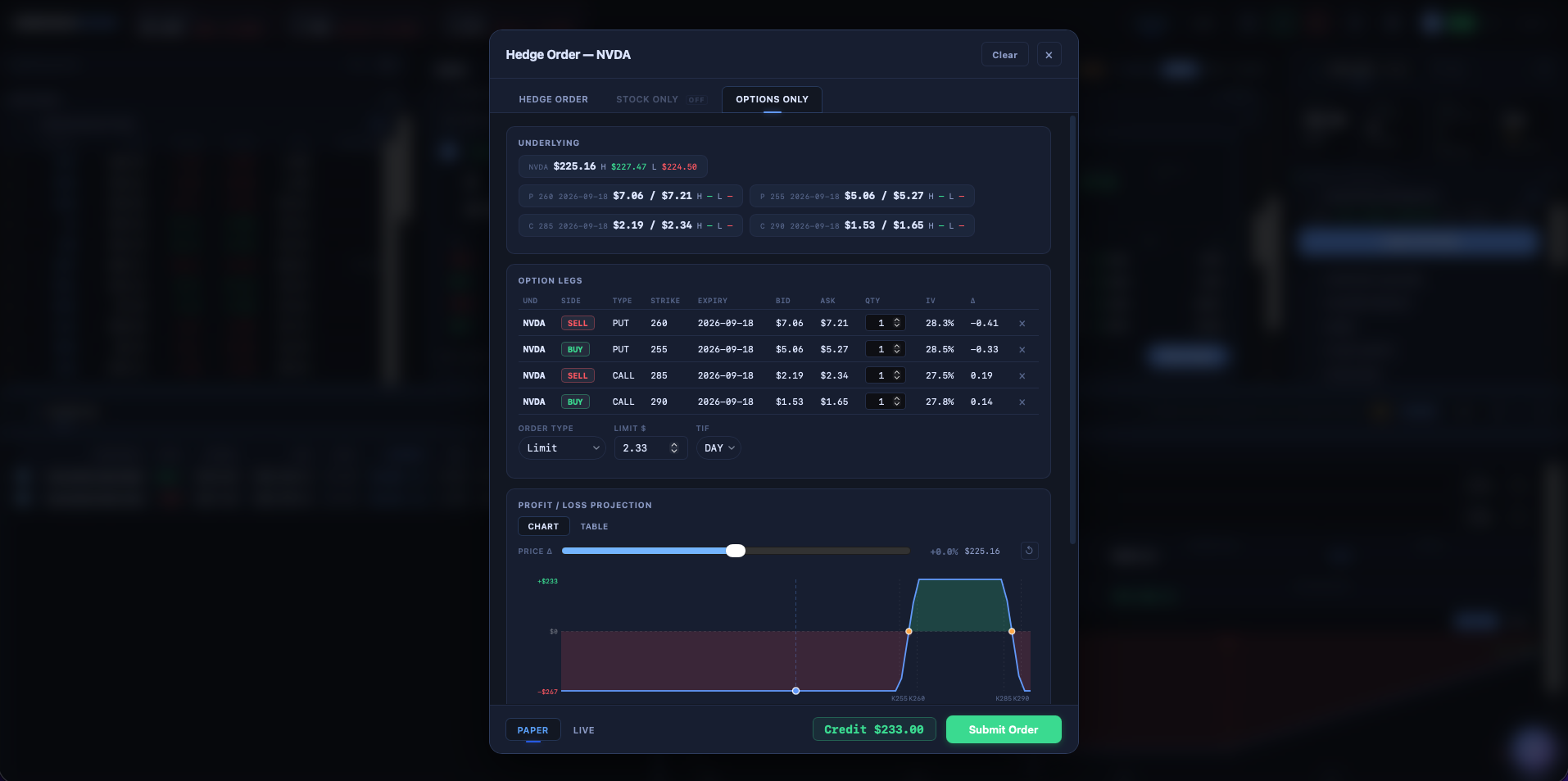
Several — one order per contract, submitted one after another. That is deliberate: contracts on different underlyings cannot be a single multi-leg order, and same-day expiries are usually meant to fill independently rather than as a package. Each carries its own limit price, which you can edit per row before submitting, and the confirmation tells you exactly how many orders are about to go out. Some may fill while others do not. Ordinary spreads built from the options chain still go out as one multi-leg order.
My chain or chart is empty. What now?
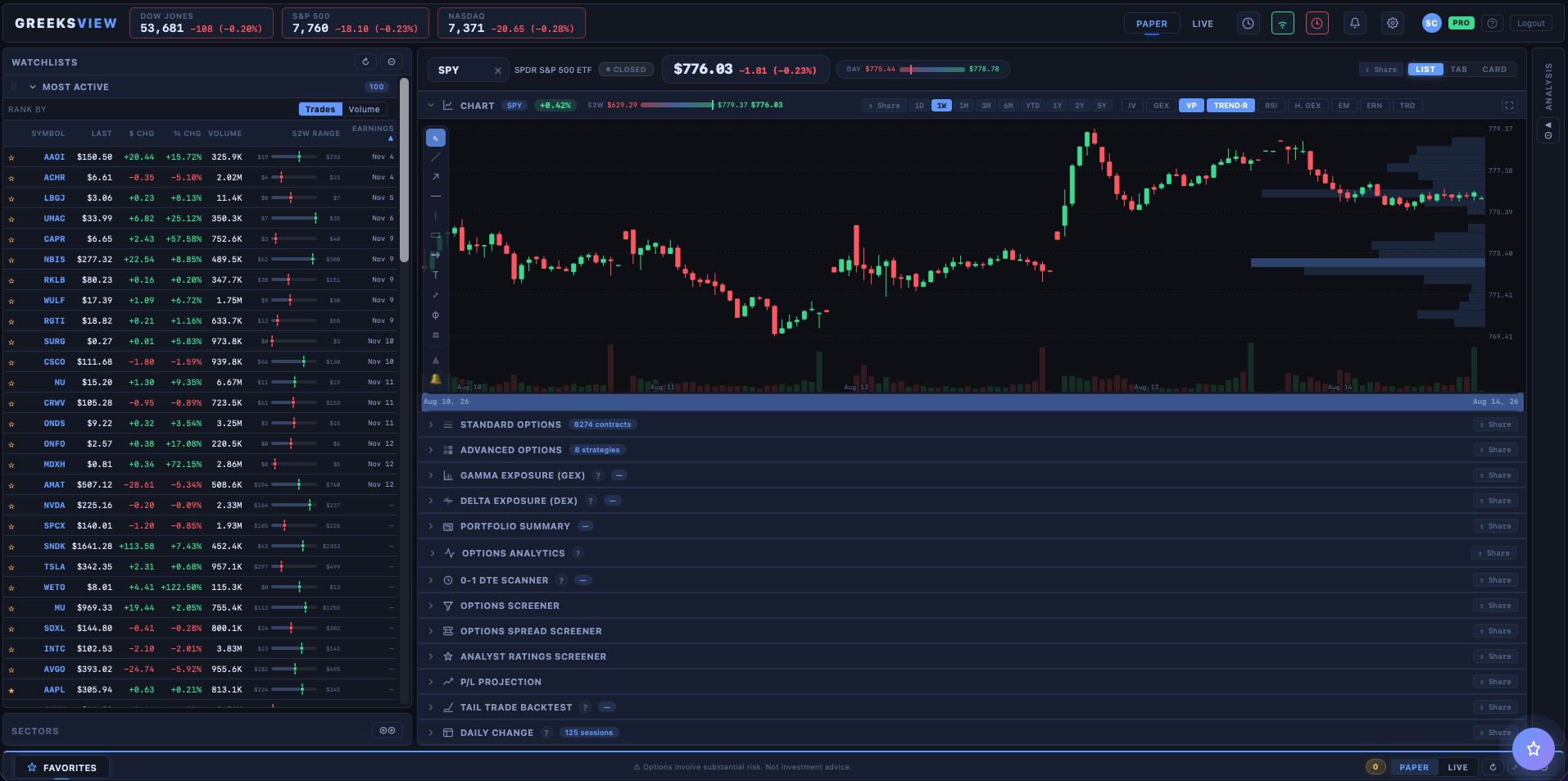
The desk shows an empty chain rather than inventing one. Check the screen's source and delay label, and confirm the symbol actually has listed options. If you have connected Alpaca, some of its data also depends on which Alpaca plan you are on, so an endpoint your plan does not include will simply return nothing.
How do I cancel, and what happens to my access?
One click in the billing portal, no email required. Cancelling schedules the end of your subscription rather than cutting you off — you keep Pro until the end of the period you have already paid for, then the account reverts to Free. Nothing is deleted, and re-subscribing later picks up where you left off. Fees already paid are not refunded except as the Terms state, where we choose to grant a refund, or where the law requires it.
What happens if I delete my account?
It is irreversible, so export first — the same screen offers a JSON copy of your account data. Deletion cancels any active subscription straight away (unused time is not refunded unless the terms or the law require it) and removes your account record, your saved settings and layout, your sign-in and security-log history, your usage records and any pending email tokens. It also removes your shared chart snapshots. It also removes your research orders and refund claims. Stripe keeps its own customer and payment records under its own policy. Your Alpaca access token is not part of this either, because it was never on our servers: it lives in your browser and goes away when you clear it, and you revoke GreeksView's access in your Alpaca dashboard. Positions and orders live at your broker and are unaffected.
Are the numbers live, and can I rely on them?
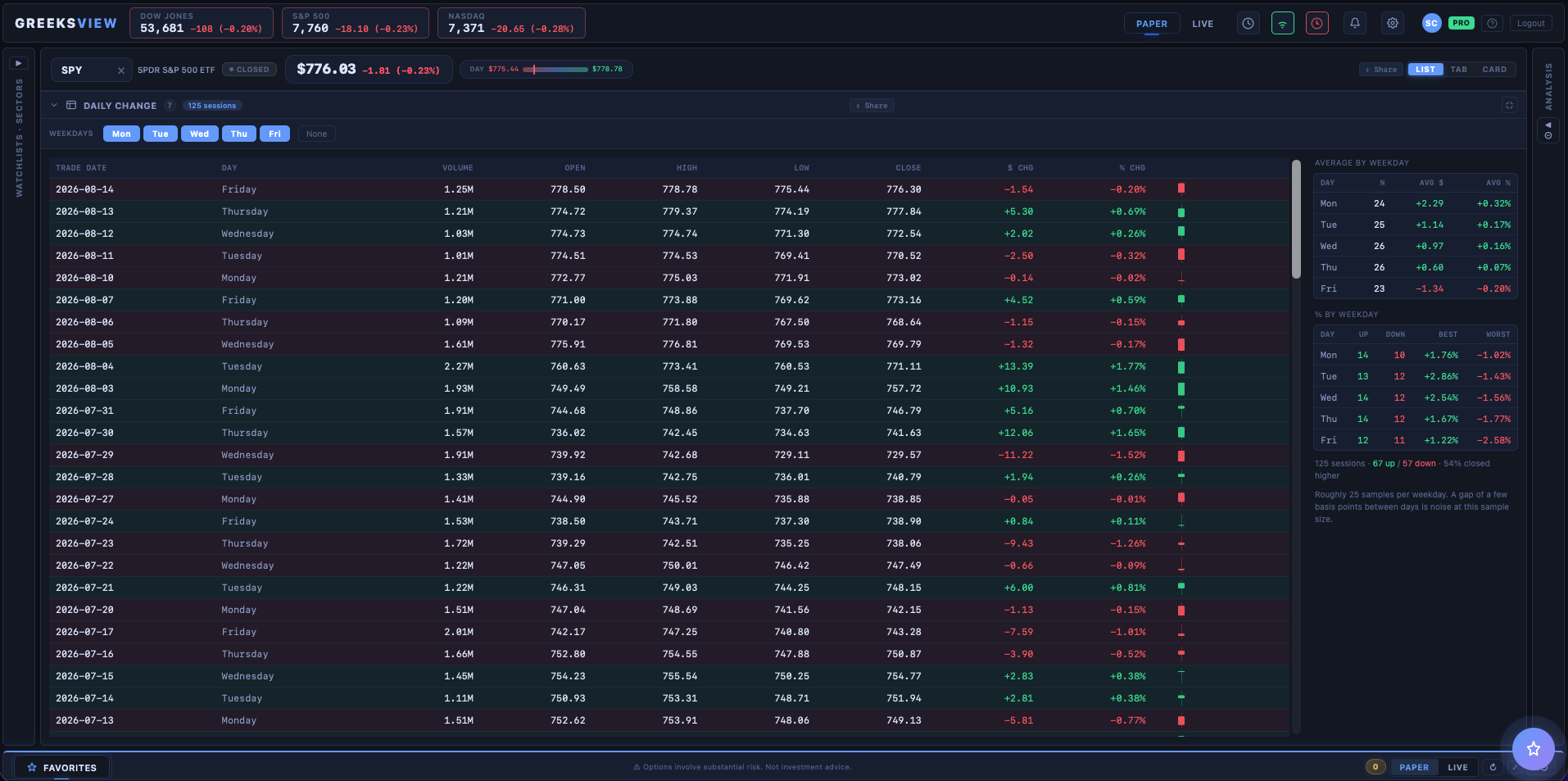
Figures built from your broker's feed are as live as that feed — computed in your browser from the chain as it arrives, with nothing from that feed cached on our side or recomputed on a schedule. Figures from our licensed market-data feed are not live: options figures are fair-market-value estimates (no bid or ask), stock and ETF quotes are delayed, each screen labels which it shows, and our servers cache that data. Stored end-of-day option chains carry the session's closing bid and ask, always labelled EOD with their date; realtime options quotes are absent. Quotes can be delayed or incomplete depending on the feed, and every analytic here is a model of the market rather than a fact about it. Check any figure you are about to trade on against your broker before you act on it.